
The Handshake / What is changing / Chapter 1

Why does the other side suddenly know so much, and still not enough?

The end of the clueless customer (and the rise of the half-knowing one)

Layers:

Because they are handed answers without the experience to place them. An AI delivers the most plausible average solution in seconds, in a tone that leaves no room for doubt. That gives the other side enough knowledge to hold a firm opinion and too little to judge its quality. The cluelessness has not disappeared, it has only stopped being visible from the outside.

It is tempting to open this book with a thunderclap: the clueless customer is dead. It sounds good, it sells well, and it is wrong. More precisely it is half right, and the half that is wrong is exactly the point.

The cluelessness has moved house

The customer has not become smarter. They have become clueless in a different way. They used to arrive with a problem and the honest admission that they could not solve it. Today they arrive with an answer they take to be the solution, in the confident tone of someone who believes they have done their homework.

The cluelessness has not disappeared; it has moved house: from the open "I don't know" to the concealed "I think I know." And concealed cluelessness is more expensive for both sides than the open kind, because it has to be uncovered before you can even begin.

Enough for an opinion, too little for a judgment

Let us name the phenomenon: half-knowledge. It is neither ignorance nor knowledge but the dangerous in-between. Enough to hold an opinion. Too little to judge quality.

The AI effortlessly hands the customer the most plausible average solution, not the best and not the one that fits their specific case, and it delivers it in a tone so assured that they take it for the truth. The customer now appears with a solution sketch that sounds plausible, with technical vocabulary they only partly grasp, with a price expectation drawn from AI ballpark figures, and with the expectation that you will quickly confirm or refute all of it, ideally for free.

Half-informed and AI-armed

This is the core: the customer has not become more stupid, they have become half-informed and AI-armed. And they can hold your offer, your reasoning, your price up against an AI in real time. This is not a passing fashion. The numbers say it is becoming the rule, and faster than most industries care to admit.

In Germany, by spring 2025 two thirds of people aged 16 and over already used generative AI such as ChatGPT, Copilot or Gemini at least occasionally; a year earlier it was 40 percent. Around half now use AI to search for information. A quarter have already asked an AI for financial advice, and almost as many trust the AI's advice more than a human financial advisor. When a quarter of the population believes the machine over the professional on money matters, then the knowledge gradient on which the entire advisory economy rested is no longer a gradient.

Bitkom 2025, representative, n≈1,005

Example: the appointment at the bank

You go to the advisory meeting knowing that you understand little about investing. You ask what the advisor recommends and then decide whether you believe her.

You bring a printout. An AI has proposed an allocation for you, with technical terms and a figure for the running costs. You no longer ask what would make sense, you ask whether your plan is all right. What the AI left out because you did not ask for it never comes up in the conversation.

Next time your agent sends the questions in advance and the bank's agent answers them. You then talk about a result that two systems negotiated between them. Whether something is missing from it, you will notice only if you decided beforehand what matters to you.

Why the battle cry misleads

So why not use "the end of the clueless customer" as a battle cry after all? Because it lures the provider into the wrong posture. Whoever believes their counterpart is now informed treats them like an expert and is surprised when the collaboration fails. Whoever understands instead that their counterpart is half-knowing, that is, convinced and at the same time uncalibrated, knows what to do: not to explain what the other does not know, but to gently place what they believe they know. That is an entirely different activity, and the rest of this book is about it.

Borrowed knowledge

A useful extension of this diagnosis is the idea of borrowed knowledge. Borrowed does not mean false. An AI answer may be correct, useful, and far ahead of the user's own understanding. But it can be used before its assumptions, limits, provenance, and consequences have truly been absorbed. Access to answers has grown faster than the ability to judge their fit. A new confidence therefore appears at the surface while the experience, calibration, and responsibility that turn a plausible answer into sound judgment may still be missing underneath.

This does not affect customers alone. Providers, organizations, and agents also work with mixtures of lived experience, professional judgment, machine synthesis, and unexamined assumptions. The new gradient therefore no longer runs simply between those who possess information and those who do not. It runs between producing a convincing answer and placing that answer responsibly and carrying its consequences. Half-knowledge describes the visible condition; borrowed knowledge explains one of its most important pathways.

The Deep Currents of Intent

The visible conversation is only the surface. Fast-changing AI answers, terminology, tasks, and offers are shaped by slower objectives, authority, commitments, and values. In the other direction, experience, friction, and evidence travel back down and change, depending on their significance, the operational movement, the project, the strategy, or in rare cases even the enduring course.

The deep currents of intent
Read the scene as text
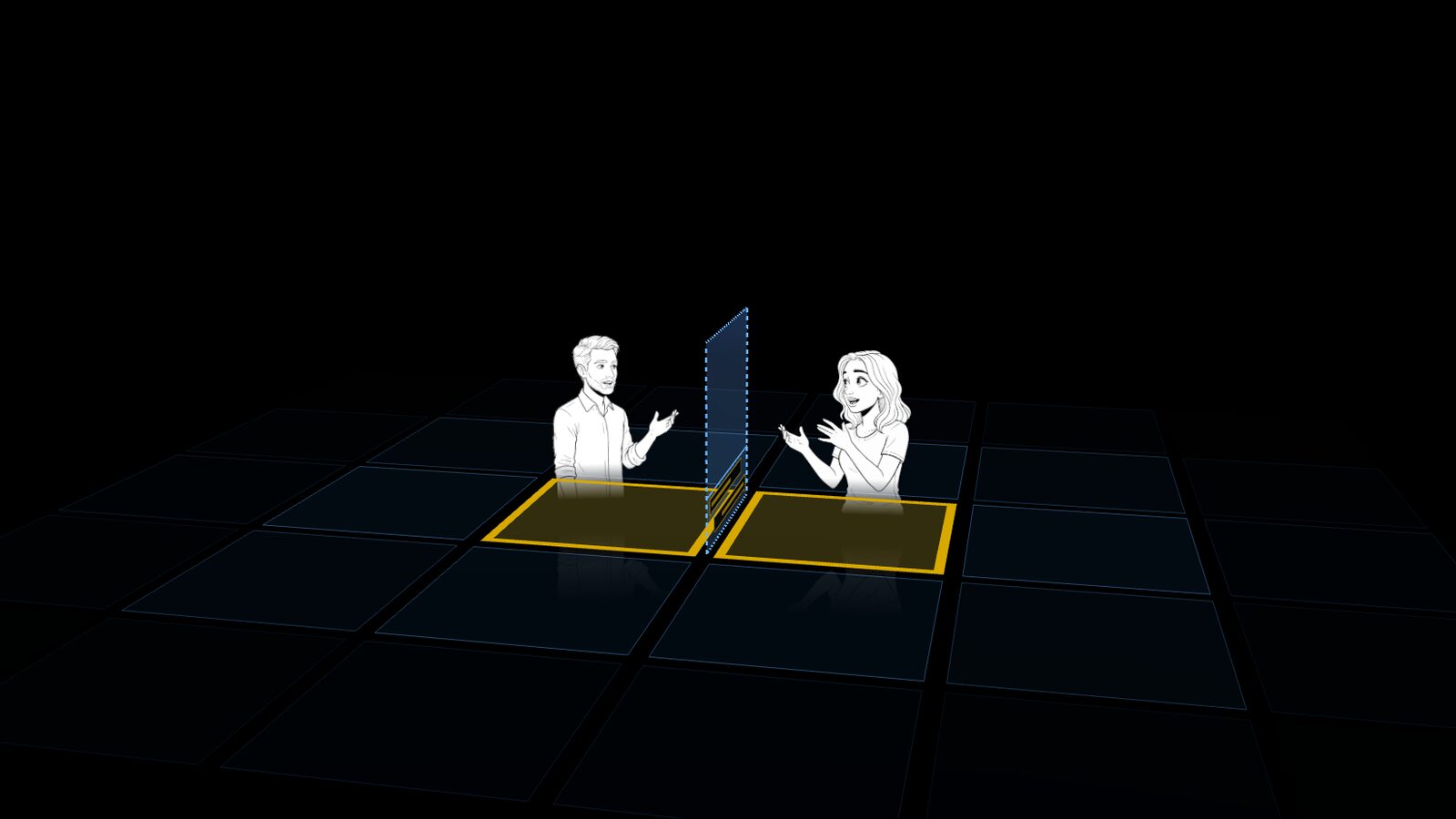
A provider on the left and a customer on the right with a conversation window between them; beneath both hang five layers from the waves down to the bedrock

Step 3 of 5: From the bottom up: what carries, directs. Each layer gives the one above it its direction. The bedrock grounds the deep currents, they direct the strategy, the strategy authorizes projects, and the projects focus the tasks of the day. Out of those comes what lands in the window. New: transfer “grounds” to tile 2,1, transfer “directs” to tile 2,1, transfer “authorizes” to tile 2,1, transfer “focuses” to tile 2,1, transfer “produces” to the Surface handshake.

From the bottom up: what carries, directs.

Each layer gives the one above it its direction. The bedrock grounds the deep currents, they direct the strategy, the strategy authorizes projects, and the projects focus the tasks of the day. Out of those comes what lands in the window.

1Foam

Foam is this picture's name for everything that rises to the surface quickly: AI answers, terminology, borrowed knowledge. It looks like knowledge and weighs almost nothing. Whether it holds is decided in the layers beneath.

As text
  • The deep currents of intent
  • Step 3 of 5: From the bottom up: what carries, directs
    • Each layer gives the one above it its direction. The bedrock grounds the deep currents, they direct the strategy, the strategy authorizes projects, and the projects focus the tasks of the day. Out of those comes what lands in the window.
  • Board: 4 by 3 tiles
  • Actors
    • The provider stands on tile 1,1
      • Below it, nearest first:
        • Waves, Daily goals, tasks, prompts, offers
        • Tides, Short-term objectives, projects, budgets
        • Mid-water currents, Strategy, authority, capabilities, policies
        • Deep currents, Long-term outcomes, commitments, red lines
        • Bedrock, Identity, dignity, values, purpose
    • The customer stands on tile 2,1
      • Below it, nearest first:
        • Waves, Daily goals, tasks, prompts, offers
        • Tides, Short-term objectives, projects, budgets
        • Mid-water currents, Strategy, authority, capabilities, policies
        • Deep currents, Long-term outcomes, commitments, red lines
        • Bedrock, Identity, dignity, values, purpose
  • Frames
    • Surface handshake between The provider and The customer, 2 of 8 used
      • Message from The customer: “According to the AI, I am owed a refund.”
      • Message from The provider: “That depends on your plan.”
      • Through the Surface handshake, The provider sees: The customer and the window's content.
      • Through the Surface handshake, The customer sees: The provider and the window's content.
  • Transfers
    • Grounds goes to Deep currents on tile 2,1
    • Directs goes to Mid-water currents on tile 2,1
    • Authorizes goes to Tides on tile 2,1
    • Focuses goes to Waves on tile 2,1
    • Produces goes to Surface handshake
  • Markers
    • 1. Foam
      • Foam is this picture's name for everything that rises to the surface quickly: AI answers, terminology, borrowed knowledge. It looks like knowledge and weighs almost nothing. Whether it holds is decided in the layers beneath.
JSON
tiefenstroemungen.scene.json, the whole fileDownload JSON
{12}
"$schema": "/world-stage/scene.schema.v1.json"
"schemaVersion": 1
"id": "01a0dfb1-35fb-744a-b98b-9fdb4c99c03a"
"slug": "tiefenstroemungen"
"title": {2}
"de": "Die Tiefenströmungen der Intention"
"en": "The deep currents of intent"
"description": {2}
"de": "Zwei Gegenüber begegnen sich an der Oberfläche. Unter jedem liegen Schichten, die von unten tragen und in die das Ergebnis zurücksinkt."
"en": "Two counterparts meet at the surface. Beneath each lie layers that carry from below and into which the outcome sinks back."
"poster": "poster"
"assets": {4}
"poster": {5}
"src": "/world-stage/posters/tiefenstroemungen.jpg"
"width": 1600
"height": 900
"alt": {2}
"de": "Ein Anbieter links und eine Kundin rechts, dazwischen ein Gesprächsfenster; unter beiden hängen fünf Schichten von den Wellen bis zum Grund"
"en": "A provider on the left and a customer on the right with a conversation window between them; beneath both hang five layers from the waves down to the bedrock"
"credit": "Rendered in-house from step 1 of the scene tiefenstroemungen, 2026-09-27; see public/world-stage/ASSETS.md"
"man": {5}
"src": "/world-stage/actors/man.svg"
"width": 432
"height": 578
"alt": {2}
"de": "Ein Mann mit kurzem Bart, der im Gespräch mit offener Hand etwas erklärt"
"en": "A man with a short beard, explaining something with an open hand"
"credit": "Generated with Gemini (gemini-3.1-flash-image) on 2026-09-27 with woman.svg as the style reference, mirrored and traced in Illustrator; see public/world-stage/ASSETS.md"
"robot": {5}
"src": "/world-stage/actors/robot.svg"
"width": 488
"height": 588
"alt": {2}
"de": "Ein Roboter mit Kopfhörern"
"en": "A robot with headphones"
"credit": "DATENMASSIV GmbH, copied from public/prototype/robot.svg; see public/world-stage/ASSETS.md"
"woman": {5}
"src": "/world-stage/actors/woman.svg"
"width": 319
"height": 411
"alt": {2}
"de": "Eine junge Frau, die erzählt"
"en": "A young woman, talking"
"credit": "DATENMASSIV GmbH, the art of 2026-09-22 with its base fade baked in; see public/world-stage/ASSETS.md"
"state": {13}
"grid": {6}
"cols": 4
"rows": 3
"tileSize": 1
"gap": 0.08
"origin": [1,1]
"falloff": {2}
"radius": 3.5
"curve": 4
"camera": {10}
"projection": "perspective"
"view": {3}
"azimuth": 12
"elevation": 14
"distance": 6.6
"target": [0.54,-0.15,0]
"fov": 32
"zoom": 1
"fit": "content"
"limits": {2}
"distance": [4,18]
"elevation": [3,85]
"presets": {0}
"orbit": "auto"
"drift": {4}
"on": false
"azimuth": 6
"zoom": 0.03
"period": 60
"environment": {7}
"background": "#000000"
"halo": true
"shadows": false
"bloom": false
"look": {9}
"tileOpacity": 0.14
"emphasisOpacity": 0.2
"sheen": 1.5
"sheenRoughness": 0.95
"mirror": 0.13
"tierGlow": 0.56
"stackFalloff": 2.4
"hover": 0.08
"borders": {3}
"own": 0.045
"seen": 0.03
"gap": 0.008
"quality": "auto"
"motion": "auto"
"ui": {5}
"controls": "button"
"transcriptOpen": false
"jsonPaneOpen": false
"labels": "focus"
"spotlight": false
"actors": {2}
"anbieter": {10}
"party": "work"
"asset": "man"
"placement": {5}
"kind": "tile"
"at": [1,1]
"side": "center"
"fit": "contained"
"offset": [0,0,0]
"height": 0.8
"facing": {1}
"mode": "billboard"
"look": {1}
"opacity": 1
"label": {2}
"de": "Der Anbieter"
"en": "The provider"
"labelPlacement": "front"
"visible": true
"float": {4}
"on": true
"amplitude": 0.01
"period": 6.5
"phase": 0
"kundin": {10}
"party": "private"
"asset": "woman"
"placement": {5}
"kind": "tile"
"at": [2,1]
"side": "center"
"fit": "contained"
"offset": [0,0,0]
"height": 0.78
"facing": {1}
"mode": "billboard"
"look": {1}
"opacity": 1
"label": {2}
"de": "Die Kundin"
"en": "The customer"
"labelPlacement": "front"
"visible": true
"float": {4}
"on": true
"amplitude": 0.007
"period": 8.5
"phase": 2.1
"objects": {0}
"events": {0}
"drawings": {0}
"tiles": {2}
"1,1": {5}
"emphasis": "stage"
"above": []
"below": []
"stackGap": 0.08
"visible": true
"2,1": {5}
"emphasis": "stage"
"above": []
"below": []
"stackGap": 0.08
"visible": true
"frames": {1}
"begegnung": {13}
"kind": "context-window"
"between": ["anbieter","kundin"]
"label": {2}
"de": "Begegnung an der Oberfläche"
"en": "Surface handshake"
"width": 0.9
"height": 0.95
"style": "dotted"
"opacity": 0.2
"capacity": 8
"content": [2]
0: {5}
"kind": "message"
"id": "ki-antwort"
"from": "kundin"
"text": {2}
"de": "Laut KI steht mir eine Erstattung zu."
"en": "According to the AI, I am owed a refund."
"weight": 1
1: {5}
"kind": "message"
"id": "tarif"
"from": "anbieter"
"text": {2}
"de": "Das hängt von Ihrem Tarif ab."
"en": "That depends on your plan."
"weight": 1
"visible": true
"turn": 0
"throughView": "filter"
"throughTrace": 0.1
"sights": {0}
"markers": {1}
"schaum": {5}
"number": 1
"label": {2}
"de": "Schaum"
"en": "Foam"
"anchor": {2}
"kind": "frame"
"id": "begegnung"
"expanded": false
"visible": true
"transfers": {0}
"start": {1}
"title": {2}
"de": "An der Oberfläche: das Gespräch"
"en": "At the surface: the conversation"
"steps": [4]
0: {9}
"kind": "patch"
"id": "tiefe"
"title": {2}
"de": "Unter beiden liegen dieselben Schichten"
"en": "Beneath both lie the same layers"
"transitionMs": 800
"easing": "ease-in-out"
"focus": ["anbieter","kundin"]
"fires": []
"view": {4}
"azimuth": 12
"elevation": 10
"distance": 5.2
"target": [0.54,-0.62,0]
"patch": [2]
0: {3}
"op": "add"
"path": "/tiles/1,1/below"
"value": [5]
0: {4}
"id": "a-wellen"
"title": {2}
"de": "Wellen"
"en": "Waves"
"subtitle": {2}
"de": "Tagesziele, Aufgaben, Prompts, Angebote"
"en": "Daily goals, tasks, prompts, offers"
"color": "sky"
1: {4}
"id": "a-gezeiten"
"title": {2}
"de": "Gezeiten"
"en": "Tides"
"subtitle": {2}
"de": "Kurzfristige Ziele, Projekte, Budgets"
"en": "Short-term objectives, projects, budgets"
"color": "sky"
2: {4}
"id": "a-stroemungen"
"title": {2}
"de": "Mittlere Strömungen"
"en": "Mid-water currents"
"subtitle": {2}
"de": "Strategie, Befugnis, Fähigkeiten, Regeln"
"en": "Strategy, authority, capabilities, policies"
"color": "sky"
3: {4}
"id": "a-tiefen"
"title": {2}
"de": "Tiefenströmungen"
"en": "Deep currents"
"subtitle": {2}
"de": "Langfristige Wirkungen, Verpflichtungen, rote Linien"
"en": "Long-term outcomes, commitments, red lines"
"color": "sky"
4: {4}
"id": "a-grund"
"title": {2}
"de": "Grund"
"en": "Bedrock"
"subtitle": {2}
"de": "Identität, Würde, Werte, Zweck"
"en": "Identity, dignity, values, purpose"
"color": "gold"
1: {3}
"op": "add"
"path": "/tiles/2,1/below"
"value": [5]
0: {4}
"id": "k-wellen"
"title": {2}
"de": "Wellen"
"en": "Waves"
"subtitle": {2}
"de": "Tagesziele, Aufgaben, Prompts, Angebote"
"en": "Daily goals, tasks, prompts, offers"
"color": "sky"
1: {4}
"id": "k-gezeiten"
"title": {2}
"de": "Gezeiten"
"en": "Tides"
"subtitle": {2}
"de": "Kurzfristige Ziele, Projekte, Budgets"
"en": "Short-term objectives, projects, budgets"
"color": "sky"
2: {4}
"id": "k-stroemungen"
"title": {2}
"de": "Mittlere Strömungen"
"en": "Mid-water currents"
"subtitle": {2}
"de": "Strategie, Befugnis, Fähigkeiten, Regeln"
"en": "Strategy, authority, capabilities, policies"
"color": "sky"
3: {4}
"id": "k-tiefen"
"title": {2}
"de": "Tiefenströmungen"
"en": "Deep currents"
"subtitle": {2}
"de": "Langfristige Wirkungen, Verpflichtungen, rote Linien"
"en": "Long-term outcomes, commitments, red lines"
"color": "sky"
4: {4}
"id": "k-grund"
"title": {2}
"de": "Grund"
"en": "Bedrock"
"subtitle": {2}
"de": "Identität, Würde, Werte, Zweck"
"en": "Identity, dignity, values, purpose"
"color": "gold"
1: {9}
"kind": "patch"
"id": "nach-oben"
"title": {2}
"de": "Von unten nach oben: was trägt, richtet aus"
"en": "From the bottom up: what carries, directs"
"transitionMs": 800
"easing": "ease-in-out"
"focus": "kundin"
"fires": []
"view": {4}
"azimuth": 12
"elevation": 10
"distance": 5.2
"target": [0.54,-0.62,0]
"patch": [5]
0: {3}
"op": "add"
"path": "/transfers/oben-1"
"value": {5}
"from": {3}
"kind": "tile"
"at": [2,1]
"tier": "k-grund"
"to": {3}
"kind": "tile"
"at": [2,1]
"tier": "k-tiefen"
"color": "sky"
"style": "solid"
"label": {2}
"de": "trägt"
"en": "grounds"
1: {3}
"op": "add"
"path": "/transfers/oben-2"
"value": {5}
"from": {3}
"kind": "tile"
"at": [2,1]
"tier": "k-tiefen"
"to": {3}
"kind": "tile"
"at": [2,1]
"tier": "k-stroemungen"
"color": "sky"
"style": "solid"
"label": {2}
"de": "richtet aus"
"en": "directs"
2: {3}
"op": "add"
"path": "/transfers/oben-3"
"value": {5}
"from": {3}
"kind": "tile"
"at": [2,1]
"tier": "k-stroemungen"
"to": {3}
"kind": "tile"
"at": [2,1]
"tier": "k-gezeiten"
"color": "sky"
"style": "solid"
"label": {2}
"de": "befugt"
"en": "authorizes"
3: {3}
"op": "add"
"path": "/transfers/oben-4"
"value": {5}
"from": {3}
"kind": "tile"
"at": [2,1]
"tier": "k-gezeiten"
"to": {3}
"kind": "tile"
"at": [2,1]
"tier": "k-wellen"
"color": "sky"
"style": "solid"
"label": {2}
"de": "fokussiert"
"en": "focuses"
4: {3}
"op": "add"
"path": "/transfers/oben-5"
"value": {5}
"from": {3}
"kind": "tile"
"at": [2,1]
"tier": "k-wellen"
"to": {2}
"kind": "frame"
"id": "begegnung"
"color": "sky"
"style": "solid"
"label": {2}
"de": "erzeugt"
"en": "produces"
2: {9}
"kind": "patch"
"id": "zurueck"
"title": {2}
"de": "Zurück in die Tiefe: je tiefer, desto seltener"
"en": "Back into the depths: the deeper, the rarer"
"transitionMs": 800
"easing": "ease-in-out"
"focus": ["begegnung","kundin"]
"fires": []
"view": {4}
"azimuth": 12
"elevation": 10
"distance": 5.2
"target": [0.54,-0.62,0]
"patch": [13]
0: {2}
"op": "remove"
"path": "/transfers/oben-1"
1: {2}
"op": "remove"
"path": "/transfers/oben-2"
2: {2}
"op": "remove"
"path": "/transfers/oben-3"
3: {2}
"op": "remove"
"path": "/transfers/oben-4"
4: {2}
"op": "remove"
"path": "/transfers/oben-5"
5: {3}
"op": "add"
"path": "/transfers/zurueck-1"
"value": {5}
"from": {2}
"kind": "frame"
"id": "begegnung"
"to": {3}
"kind": "tile"
"at": [2,1]
"tier": "k-wellen"
"color": "coral"
"style": "dashed"
"label": {2}
"de": "anpassen"
"en": "adapt"
6: {3}
"op": "add"
"path": "/transfers/zurueck-2"
"value": {5}
"from": {3}
"kind": "tile"
"at": [2,1]
"tier": "k-wellen"
"to": {3}
"kind": "tile"
"at": [2,1]
"tier": "k-gezeiten"
"color": "coral"
"style": "dashed"
"label": {2}
"de": "überprüfen"
"en": "reconsider"
7: {3}
"op": "add"
"path": "/transfers/zurueck-3"
"value": {5}
"from": {3}
"kind": "tile"
"at": [2,1]
"tier": "k-gezeiten"
"to": {3}
"kind": "tile"
"at": [2,1]
"tier": "k-stroemungen"
"color": "coral"
"style": "dashed"
"label": {2}
"de": "revidieren"
"en": "revise"
8: {3}
"op": "add"
"path": "/transfers/zurueck-4"
"value": {5}
"from": {3}
"kind": "tile"
"at": [2,1]
"tier": "k-stroemungen"
"to": {3}
"kind": "tile"
"at": [2,1]
"tier": "k-tiefen"
"color": "coral"
"style": "dashed"
"label": {2}
"de": "selten verwandeln"
"en": "rarely transform"
9: {3}
"op": "add"
"path": "/tiles/2,1/below/0/glow"
"value": 2
10: {3}
"op": "add"
"path": "/tiles/2,1/below/1/glow"
"value": 1.1
11: {3}
"op": "add"
"path": "/tiles/2,1/below/2/glow"
"value": 0.5
12: {3}
"op": "add"
"path": "/tiles/2,1/below/3/glow"
"value": 0.18
3: {9}
"kind": "patch"
"id": "agenten"
"title": {2}
"de": "Oft sprechen zuerst die Agenten"
"en": "Often the agents speak first"
"transitionMs": 800
"easing": "ease-in-out"
"focus": ["anbieter-agent","kundin-agent"]
"fires": []
"view": {4}
"azimuth": 12
"elevation": 11
"distance": 6.4
"target": [0.54,-0.55,0]
"patch": [8]
0: {2}
"op": "remove"
"path": "/transfers/zurueck-1"
1: {2}
"op": "remove"
"path": "/transfers/zurueck-2"
2: {2}
"op": "remove"
"path": "/transfers/zurueck-3"
3: {2}
"op": "remove"
"path": "/transfers/zurueck-4"
4: {3}
"op": "add"
"path": "/actors/anbieter-agent"
"value": {6}
"party": "agent"
"asset": "robot"
"height": 0.62
"placement": {2}
"kind": "tile"
"at": [0,1]
"label": {2}
"de": "Sein Agent"
"en": "His agent"
"float": {3}
"amplitude": 0.01
"period": 6.5
"phase": 0
5: {3}
"op": "add"
"path": "/actors/kundin-agent"
"value": {6}
"party": "agent"
"asset": "robot"
"height": 0.62
"placement": {2}
"kind": "tile"
"at": [3,1]
"label": {2}
"de": "Ihr Agent"
"en": "Her agent"
"float": {3}
"amplitude": 0.01
"period": 6.1
"phase": 1.3
6: {3}
"op": "add"
"path": "/transfers/auftrag-a"
"value": {5}
"from": {3}
"kind": "tile"
"at": [1,1]
"tier": "a-wellen"
"to": {3}
"kind": "actor"
"id": "anbieter-agent"
"offset": [0,0,0]
"color": "sky"
"style": "solid"
"label": {2}
"de": "nur die Wellen"
"en": "only the waves"
7: {3}
"op": "add"
"path": "/transfers/auftrag-k"
"value": {5}
"from": {3}
"kind": "tile"
"at": [2,1]
"tier": "k-wellen"
"to": {3}
"kind": "actor"
"id": "kundin-agent"
"offset": [0,0,0]
"color": "sky"
"style": "solid"
"label": {2}
"de": "nur die Wellen"
"en": "only the waves"
"meta": {2}
"draft": "The layer model of the chapter das-ende-des-ahnungslosen-kunden, section 'Die Tiefenströmungen der Intention', built on 2026-09-26 as the stage alternative to its mermaid diagram. The foam is the window's content, not a tier. Both stacks are the same, because the chapter says the model holds for provider and customer alike; the flows are shown on the customer's stack only, to keep the lines readable. Frequency of change is the tiers' glow in step zurueck: the waves change often, the deep currents rarely, the bedrock not at all. Drafted by an agent."
"layout": "The cast stands where the other scenes' cast stands (the provider at x 0 on tile 1,1, the customer at 1.08 on tile 2,1)."

Before you pass on an AI answer, check two things: what it rests on and what you are left with if it is wrong. And tell your counterpart that the answer came from an AI. It costs you nothing and spares you both the round in which what you actually know has to be uncovered first.